Reviewed by Dr. Shweta Lamba Narula,
Niacinamide at 10% is one of the most evidence-backed actives for Indian skin: it inhibits melanosome transfer to reduce post-inflammatory hyperpigmentation (PIH), measurably reduces sebum output, and strengthens the skin barrier. A randomised controlled trial found 4% niacinamide comparable to 4% hydroquinone for melasma treatment over 8 weeks, without the side effects. Results begin at 4 weeks; the full benefit accumulates over 8-12 weeks of consistent use.
Best Niacinamide Serum for Indian Skin: Why 10% Works
If you have been dealing with dark marks after every breakout, or oily skin that feels congested even after cleansing, niacinamide is one of the most comprehensively effective actives available and Indian skin responds to it particularly well. Here is why.
What Is Niacinamide and Why Does Indian Skin Benefit Most?
Niacinamide is the active form of vitamin B3, a water-soluble vitamin that works across multiple skin pathways simultaneously. Unlike single-target actives, niacinamide addresses four common concerns at once: post-inflammatory hyperpigmentation (PIH), excess sebum, a weakened skin barrier, and early pigmentation.
Indian skin sits predominantly at Fitzpatrick types III-V. At these phototypes, melanocytes are more reactive. A minor inflammation like an acne spot can trigger excess melanin production and leave a dark mark for weeks or months. This is why PIH is disproportionately common in Indian skin, and why an ingredient that specifically interrupts the melanin transfer pathway has outsized value in this population.
What Does 10% Niacinamide Actually Do in a Serum?
At 10%, niacinamide works through three well-documented mechanisms:
Inhibiting melanosome transfer: Melanin is produced in melanocytes and transferred to surrounding skin cells via structures called melanosomes. Niacinamide blocks this transfer, reducing pigment reaching the skin surface. In a controlled clinical study, niacinamide significantly decreased hyperpigmentation after 4 weeks of use, without disrupting melanin production itself, making it safe for all skin tones.
Reducing sebum output: Niacinamide modulates sebocyte differentiation, the process controlling how much sebum sebaceous glands produce. At 5% and above, it measurably reduces oil levels over 8-12 weeks of use. For oily Indian skin, this means less midday shine and fewer clogged pores.
Strengthening the skin barrier: Niacinamide supports ceramide synthesis in the stratum corneum, reinforcing the barrier that keeps moisture in and irritants out. A stronger barrier means other actives like retinol or exfoliating acids are better tolerated.
Is 10% Niacinamide Safe, or Is 5% Enough?
10% niacinamide is generally well-tolerated by most skin types, including sensitive skin. At concentrations above 5%, some users experience mild temporary flushing, a harmless response to high niacinamide that resolves quickly. This is not an allergic reaction and does not indicate irritation.
For Indian skin dealing with moderate-to-severe PIH and significant oiliness, 10% delivers measurably stronger results than 5% in the same timeframe. If you have very reactive skin, start with every-other-day use for two weeks before going daily.
Which Niacinamide Serum Should You Choose?
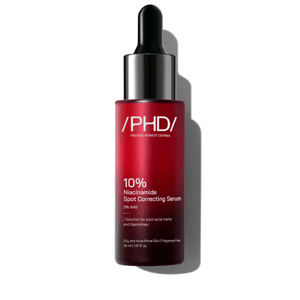
PHD 10% Niacinamide Spot Correcting Serum is formulated at 10% niacinamide, the concentration with the strongest evidence for PIH reduction and sebum control. The serum has a lightweight, water-based texture that absorbs quickly without leaving residue, making it suitable for oily and combination skin. Dermatologist-tested for daily use. Directly addresses the two most common concerns of Indian skin: dark marks from acne and excess oil production. Available at phdbeauty.com.
The Ordinary 10% Niacinamide + 1% Zinc: A widely available, budget-priced option that pairs niacinamide at 10% with 1% zinc PCA to further reduce sebum production. The formulation is minimal by design, with no added emollients. Suitable for very oily skin, but can feel sticky on dry or combination skin. The addition of zinc makes it particularly effective for congestion and surface oiliness.
Paula's Choice 10% Niacinamide Booster: A concentrated booster format designed to be mixed with moisturiser or used alone. Contains 10% niacinamide alongside peptides and hyaluronic acid for an anti-ageing and brightening dual function. The booster format gives more control over the dosage. Significantly higher price point when imported.
Minimalist 10% Niacinamide + 1% Zinc: An India-based formulation at an accessible price point, closely modelled on The Ordinary's approach. Good availability across Indian e-commerce platforms. At 10% niacinamide with zinc, it covers oiliness and basic brightening.
All four options deliver niacinamide at 10%. The difference lies in supporting ingredients, texture, and formulation design. The /PHD/ niacinamide serum is designed for Indian oily and acne-prone skin specifically, without the zinc that can cause dryness in combination skin, and without the high import pricing of Paula's Choice.
Frequently Asked Questions
Can I use niacinamide with vitamin C serum?
Yes. The old concern about niacinamide and vitamin C forming niacin (which causes flushing) is based on outdated research using very high temperatures. At normal skincare formulation and storage temperatures, this reaction does not occur in any meaningful quantity. Modern studies confirm the two actives are safe to use together. If you experience mild flushing, apply them 10 minutes apart.
How long does 10% niacinamide take to fade dark marks?
Most users see visible reduction in dark marks within 4 to 6 weeks of twice-daily use. Deeper or older PIH takes longer. Expect 8 to 12 weeks for significant fading. Results depend on the age of the marks, skin phototype, and whether new breakouts are still occurring. Pairing niacinamide with daily SPF significantly speeds fading.
Is The Ordinary niacinamide as effective as /PHD/'s?
Both use niacinamide at 10%, so the core active is the same concentration. The main differences are in supporting ingredients and formulation texture. The Ordinary adds 1% zinc PCA, which enhances sebum control but can be drying for combination skin. /PHD/'s formula is designed without zinc for Indian skin that needs PIH and oiliness addressed without additional dryness risk.
Is niacinamide serum safe for Indian skin tones?
Yes. Niacinamide does not cause photosensitivity, does not thin the skin, and does not carry the side-effect risks of hydroquinone or prescription brighteners. It is specifically well-studied for Fitzpatrick III-V skin tones, the most common phototypes in India. It is one of the safest long-term brightening actives available.
What is the correct order to apply niacinamide in a skincare routine?
Apply niacinamide serum after cleansing and toning, before heavier serums, moisturiser, and sunscreen. As a water-based serum, it absorbs quickly. Morning and evening use is recommended. If you use retinol in the evening, apply retinol first, then niacinamide to buffer any irritation.
Can I use niacinamide if I have sensitive skin?
Yes. Niacinamide is one of the best-tolerated actives for sensitive skin. At 10%, a small percentage of people experience mild, temporary flushing. This resolves in minutes and is not an allergic reaction. If concerned, start with every-other-day use for two weeks to allow your skin to adjust before increasing to daily.