Reviewed by Dr. Shweta Lamba Narula,
The short answer: Niacinamide (vitamin B3) is one of the most versatile actives in skincare - it inhibits melanin transfer to reduce dark spots, regulates sebum production for oily skin, reduces inflammation around active acne, and strengthens the skin barrier. For Indian skin dealing with post-inflammatory hyperpigmentation, enlarged pores and acne, a 10% niacinamide serum is the clinical sweet spot: well-studied, effective for most concerns without irritation. Results take 4 to 8 weeks of consistent daily use - not overnight.
Niacinamide has become one of the most-mentioned ingredients in Indian skincare conversations, and for good reason. It is stable unlike vitamin C, pH-flexible unlike retinol, and tolerates combination with almost every other active. But searches for the best niacinamide serum for Indian skin return products at concentrations from 2% to 20%, with wildly different co-ingredient stacks - and the right choice depends entirely on what your skin actually needs.
What does niacinamide actually do for Indian skin?
Niacinamide is water-soluble vitamin B3. It is one of the few skincare actives with peer-reviewed data supporting multiple distinct mechanisms.
Post-inflammatory hyperpigmentation (PIH): Niacinamide inhibits the transfer of melanosomes - melanin-containing packets - from melanocytes to surrounding skin cells. For Indian skin, which produces more melanin in response to injury and is therefore more prone to dark marks after acne, this is the primary reason to use it.
Pore appearance: Niacinamide has been shown to reduce the visible appearance of enlarged pores. Pores don't literally shrink, but niacinamide improves skin texture and normalises sebum production, which makes pores appear smaller.
Sebum regulation: Niacinamide modulates sebum production, making it useful for oily and acne-prone skin that overproduces oil in response to India's heat and humidity.
Barrier support: It increases the production of ceramides and fatty acids in the skin barrier, improving hydration and reducing sensitivity.
Anti-inflammatory action: Niacinamide reduces the production of inflammatory cytokines, helping to calm redness around active breakouts.
Most of these benefits have been studied at concentrations of 2% to 10%. 10% is the concentration where the most consistent clinical data exists.
How do you choose the right niacinamide serum for your skin concern?
Three practical decisions:
1. Concentration. 2% to 5% for daily maintenance and light oil control. 10% for visible pore refinement, active spot correction and PIH. 20% for clinical-strength intervention in stubborn pigmentation or severe enlarged pores - at this concentration, some users experience flushing on application; patch test first.
2. Co-ingredients. For dark spots: look for Arbutin or NAG alongside niacinamide. For oily and acne-prone skin: Centella Asiatica to calm, Salicylic Acid to clear pores. For anti-ageing alongside pore work: Peptides or Tripeptide-1. For barrier-sensitive skin: Panthenol.
3. What you're not treating. If your main concern is not acne but deep wrinkles or laxity, niacinamide alone is not enough. Combine with retinol at night and vitamin C in the morning for broader coverage.
The Best Niacinamide Serums in India: 7 Picks by Concern
-
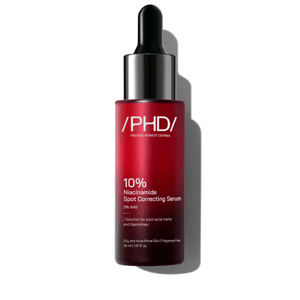
/PHD/ 10% Niacinamide Spot Correcting Serum - Best overall for post-acne marks and pores. 10% Niacinamide, Arbutin, NAG, Centella Asiatica. Fragrance-free.
- Pilgrim Niacinamide & Alpha Arbutin Skin Clarifying Serum - Best mid-range pick for pigmentation on sensitive skin. 5% niacinamide with 1% Alpha Arbutin, peptides and green tea. Suited to sensitive or beginner skin.
- Paula's Choice 10% Niacinamide Booster - Best multi-tasking option for normal to dry skin. 10% niacinamide with Ascorbyl Glucoside and Licorice Root for added brightening.
- The Ordinary Niacinamide 10% + Zinc 1% - Best budget 10% for oily and acne-prone skin. Zinc PCA for sebum control. Minimal formula, widely available.
- La Roche-Posay Mela B3 Serum - Best clinical-grade dark spot corrector. 10% niacinamide with LHA. Formulated for Fitzpatrick III-VI skin and melasma.
- Paula's Choice Clinical Niacinamide 20% Treatment - Best clinical-strength for stubborn pores. 20% niacinamide. For users who haven't responded at 10% after 8 weeks.
How do you build a daily routine around a niacinamide serum?
Morning routine for oily and acne-prone skin:
Step 1 - Cleanser. /PHD/ Ceramide Hydrating Cleanser or a gentle low-pH cleanser. Pat dry.
Step 2 - Niacinamide Serum. 2 to 3 drops of /PHD/ 10% Niacinamide Spot Correcting Serum on clean skin. Pat in gently.
Step 3 - Moisturiser. /PHD/ 3% Niacinamide Oil-Free Moisturizer - lightweight, non-greasy, extends the niacinamide benefit while providing hydration.
Step 4 - Sunscreen. /PHD/ Niacinamide Dry Touch Matte Sunscreen SPF 50 PA++++ for oily skin, or /PHD/ Panthenol Hydrating Gel Sunscreen SPF 60 PA++++ for normal and dry skin. SPF is mandatory when using niacinamide for PIH - UV drives the pigmentation process niacinamide is working to reverse.
Evening addition for faster dark spot results: Consider pairing the niacinamide serum at night with the /PHD/ 2% Alpha Arbutin Depigmentation Serum. Alpha Arbutin inhibits tyrosinase from a different mechanism to niacinamide's melanin-transfer inhibition. The two together accelerate PIH fading.
What mistakes do people most commonly make with niacinamide serums?
Expecting results in 2 weeks. Niacinamide's effect on PIH is real but gradual. Studies show consistent improvement over 8 to 12 weeks. Stopping at week 3 because the spots look the same is the most common reason people conclude niacinamide doesn't work.
Using it only at night. Niacinamide is stable and can be used morning and night. Twice-daily use produces results faster than once-daily.
Not wearing sunscreen over it. Niacinamide reduces existing PIH; UV creates new pigmentation. Without SPF, the net result is stagnation.
Frequently Asked Questions
What is the best niacinamide serum for acne marks on Indian skin?
A 10% niacinamide serum with co-ingredients like Arbutin and N-Acetyl Glucosamine (NAG) is the most effective option for post-acne marks (PIH) on Indian skin. The /PHD/ 10% Niacinamide Spot Correcting Serum pairs all three. PIH fading takes 4 to 8 weeks of daily use - results are gradual, not instant.
How long does niacinamide take to show results on dark spots and acne marks?
4 to 8 weeks of consistent daily use for visible reduction in post-acne marks. Deeper, older PIH takes 8 to 12 weeks. Niacinamide inhibits melanin transfer - the process is gradual and cumulative. Twice-daily application produces faster results than once-daily.
What is the best niacinamide concentration for oily and acne-prone skin?
10% is the most well-studied concentration for visible pore refinement and sebum regulation. For daily maintenance or beginners, 2 to 5% is a gentler starting point. 20% is clinical-strength and best reserved for users who haven't responded sufficiently at 10% after 8 weeks.
Can I use niacinamide every day?
Yes. Niacinamide is one of the most well-tolerated skincare actives and is designed for daily use. Morning and evening application is safe for most skin types, including sensitive skin. There is no build-up risk or adaptation period required.
Can I use niacinamide with vitamin C in the same routine?
Yes. The concern about a reaction between them is based on outdated lab conditions that don't reflect modern formulations. Many products co-formulate both. If you prefer separate products, a practical split is vitamin C in the morning and niacinamide at night - this avoids any theoretical flushing risk with pure L-ascorbic acid at high concentrations.
Will niacinamide help with active acne or just the marks it leaves?
Both, but through different mechanisms. Niacinamide's anti-inflammatory effect reduces redness around active breakouts. Its sebum-regulating effect reduces the oiliness that contributes to new breakouts. Its melanin-transfer inhibition addresses the dark marks left behind. For active congestion and clogged pores, pair with the /PHD/ 2% Salicylic Acid Anti-Acne Serum which exfoliates inside the pore.
Does niacinamide help with enlarged pores?
Yes. Niacinamide has been shown in clinical studies to reduce the visible appearance of enlarged pores by normalising sebum production and improving overall skin texture. Pores don't physically shrink - niacinamide improves the surface texture around them, making them appear smaller. Results are visible from 4 to 6 weeks of consistent use.
Is niacinamide serum safe to use during summer in India?
Yes. Niacinamide is stable across temperatures and does not degrade in heat the way vitamin C does. It can be used year-round without adjusting application. In summer, oily skin types may benefit from pairing it with a lightweight, non-comedogenic moisturiser and a matte-finish sunscreen to manage increased sebum production.