Reviewed by Dr. Shweta Lamba Narula,
The short answer: The best vitamin C serum for Indian skin depends on the form of vitamin C used, not just the percentage on the label. Pure L-ascorbic acid is the most-studied form but oxidises fast and stings at the low pH it needs to work. Stable derivatives like 3-O-Ethyl Ascorbic Acid work at a skin-friendly pH, resist degradation in India's heat and humidity, and suit sensitive skin. A stable 10% serum used every morning under SPF 50+ PA++++ is the most practical daily option for dark spots and uneven tone. Visible brightening typically takes 2 to 3 weeks, dark spot reduction 4 to 6 weeks of consistent use.
You bought the vitamin C serum. Bright, citrusy, full of promise. Three months later the bottle has turned a worrying shade of orange, your dark spots look exactly the same, and you quietly conclude that vitamin C doesn't work on Indian skin. Here's the twist: the best vitamin C serum for Indian skin almost certainly would have worked. The serum you had oxidised before it had a chance.
Vitamin C is one of the genuinely evidence-backed skincare actives. But it is also famously fussy, and the difference between a serum that transforms your skin tone and one that rots on the shelf comes down to a few facts nobody puts on the label.
Why does Indian skin need vitamin C more than it realises?
India sits between the tropics. UV index in most Indian cities exceeds 8 for eight months of the year. That UV does two things to skin: it generates free radicals that break down collagen and worsen pigmentation, and it directly triggers melanin production, darkening existing spots and creating new ones.
Vitamin C addresses both. It neutralises free radicals as an antioxidant and inhibits tyrosinase, the enzyme that drives melanin synthesis. For Fitzpatrick III-V skin types, the range most Indian skin falls into, post-inflammatory hyperpigmentation from acne, friction or sun is more pronounced and slower to fade precisely because more melanin is produced in response to injury. A vitamin C serum that actually stays active in the bottle is one of the smarter investments in an Indian skincare routine.
What is the difference between L-ascorbic acid and vitamin C derivatives?
This is the single most important question on a vitamin C product, and it never makes it to the front label.
L-ascorbic acid (LAA) is pure vitamin C. It is the most extensively studied form: well-documented efficacy at 10 to 20%, proven tyrosinase inhibition, proven antioxidant action. The problem is that it needs a pH below 3.5 to penetrate skin, which is why many people feel stinging on application. And LAA is unstable. It oxidises on contact with air and light, turning from colourless to yellow to brown as its potency disappears. In Indian conditions, with high heat, humidity, and frequent temperature changes, that degradation is faster.
3-O-Ethyl Ascorbic Acid (EAA) is a stable derivative. It works at a skin-friendly pH of 4 to 5, which means penetration without the sting, and it resists the rapid oxidation that makes LAA serums turn brown. When paired with Ferulic Acid, which has been shown to double the photoprotective efficacy of vitamin C combinations, a stable derivative serum outperforms an oxidised LAA serum in practice, every time.
The rule of thumb: if your serum has turned yellow or orange, it has oxidised and is delivering minimal active benefit regardless of the percentage on the label.
How do you choose the right vitamin C serum for your skin type?
Four practical criteria:
- Form of vitamin C. Sensitive, reactive or beginner skin: choose a stable derivative (EAA, sodium ascorbyl phosphate). Experienced users with resilient skin and stubborn pigmentation: L-ascorbic acid at 10 to 20% gives maximum studied efficacy.
- Packaging. Vitamin C degrades in light and air. Opaque or airless packaging preserves potency. Clear glass dropper bottles look appealing and kill the serum faster.
- Supporting ingredients. Ferulic Acid stabilises vitamin C and boosts antioxidant action. Niacinamide pairs well for tone-evening. N-Acetyl Glucosamine (NAG) adds targeted spot correction.
- Sunscreen pairing. Without SPF 50+ PA++++ over your vitamin C serum, UV creates new pigmentation faster than vitamin C can fade existing spots. The two work together or not at all.
The Best Vitamin C Serums in India: 6 Picks by Skin Type
-
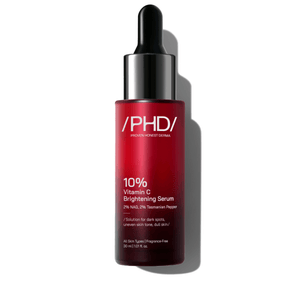
/PHD/ 10% Vitamin C Brightening Serum: Best all-round for Indian skin. 10% EAA, Ferulic Acid, NAG, Niacinamide. Fragrance-free.
- Pilgrim 10% Vitamin C Face Serum: Best budget EAA serum. 10% 3-O-Ethyl Ascorbic Acid with 5% Niacinamide and CICA. Daily brightness option at an accessible price.
- Pilgrim 15% Vitamin C Face Serum: Best step-up for stubborn dark spots. 15% EAA with Ferulic Acid and Vitamin E. For users ready to move beyond a 10% formula.
- La Roche-Posay Pure Vitamin C10 Serum (France, available on Amazon.in): Best pure L-ascorbic acid for resilient skin. 10% LAA with Salicylic Acid. Most-researched vitamin C form.
- Paula's Choice C15 Super Booster (USA, available on paulaschoice.in): Best high-potency antioxidant pick. 15% LAA with Vitamin E and Ferulic Acid. For established users targeting stubborn pigmentation.
- The Ordinary Vitamin C Suspension 23% + HA Spheres 2% (Canada, available on Nykaa): Best budget high-strength option. 23% L-ascorbic acid, waterless suspension. Highest concentration at the lowest price.
How do you build a morning routine around vitamin C serum?
Step 1: Cleanser. Wash with a gentle cleanser. Dry skin: try the /PHD/ Ceramide Hydrating Cleanser. Pat skin dry.
Step 2: Vitamin C Serum. 2 to 3 drops on dry skin, pressed gently over face and neck. Let it absorb 60 seconds before moving on.
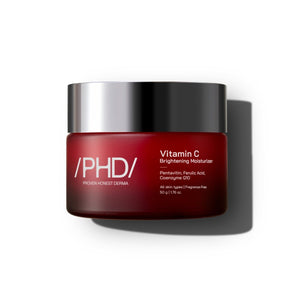
Step 3: Moisturiser. For oily skin: /PHD/ 3% Niacinamide Oil-Free Moisturizer. For dry skin: the /PHD/ Vitamin C Brightening Moisturizer serves double duty as hydration and active in one step.
Step 4: Sunscreen. Non-negotiable. /PHD/ Panthenol Hydrating Gel Sunscreen SPF 60 PA++++ for normal to dry skin or the /PHD/ Niacinamide Dry Touch Matte Sunscreen SPF 50 PA++++ for oily skin.
Without SPF, UV creates new melanin faster than vitamin C fades existing spots. The serum's work gets undone before you can see it.
What are the most common mistakes people make with vitamin C serums?
Using an oxidised serum and blaming the ingredient. A brown or deep orange serum is not delivering active vitamin C. It has degraded. This is a packaging and storage problem, not evidence that vitamin C doesn't work on your skin.
Skipping sunscreen over it. If you are using the best vitamin C serum for Indian skin without daily SPF, you are removing melanin with one hand and adding more with the other.
Expecting results in 10 days. Dark spot fading is cellular turnover over weeks. Visible improvement in 4 to 6 weeks. Deeper pigmentation takes 2 to 3 months of consistent use.
Starting at 20% because more is better. Higher concentration means higher irritation risk. Starting at 10% and building tolerance is both safer and more likely to lead to consistent daily use, which is what actually produces results.
Frequently Asked Questions
What is the best vitamin C serum for dark spots on Indian skin?
For most Indian skin types, a stable 10% 3-O-Ethyl Ascorbic Acid serum paired with Ferulic Acid is the most practical option for dark spots. It works at a skin-friendly pH without the stinging or rapid oxidation of pure L-ascorbic acid. The /PHD/ 10% Vitamin C Brightening Serum uses this combination alongside NAG and Niacinamide for multi-angle spot correction. In a 4-week consumer study (brand-reported, /PHD/ consumer panel), 97% of participants saw a reduction in dark spots.
Why does my vitamin C serum turn orange or yellow?
Oxidation. Pure L-ascorbic acid degrades on exposure to air and light, turning yellow, then orange, then brown. An oxidised serum has degraded ascorbic acid that can no longer perform its antioxidant or brightening functions. Stable derivatives like 3-O-Ethyl Ascorbic Acid resist this process significantly better than pure L-ascorbic acid, which is why they are better suited to India's heat and humidity.
Can I use vitamin C serum every day?
Yes. Vitamin C serum is designed for daily morning use. If you are using a pure L-ascorbic acid formula, start every other day for the first week if your skin is sensitive. Stable derivative serums can be used daily from day one. Consistency over weeks is what produces dark spot results, not higher concentration.
Can I use vitamin C and niacinamide together?
Yes. The old concern that they cancel each other out is based on outdated in-vitro lab conditions and does not apply to modern formulations. The /PHD/ 10% Vitamin C Brightening Serum co-formulates both. If using separate products, apply vitamin C first on clean skin, let it absorb, then layer niacinamide. There is no known irritation risk from using the two together in standard skincare concentrations.
What is the difference between L-ascorbic acid and 3-O-Ethyl Ascorbic Acid?
L-ascorbic acid is pure vitamin C, the most researched form, effective at 10-20%, but acidic, pH-sensitive and prone to oxidation. 3-O-Ethyl Ascorbic Acid is a stable vitamin C derivative that works at a skin-friendly pH, resists oxidation in heat and humidity, and is gentler on sensitive skin. It is less extensively studied than L-ascorbic acid but is widely used in Asia specifically because of its stability in warm, humid conditions like those in India.
How long does vitamin C serum take to show results on dark spots?
Visible improvement in post-acne marks and dark spots typically takes 4 to 6 weeks of consistent daily use. Deeper or older pigmentation takes 8 to 12 weeks. Vitamin C inhibits tyrosinase, the enzyme that drives melanin production, which is a gradual, cumulative process. Results depend on consistent daily use, adequate SPF, and not introducing new pigmentation triggers like UV exposure without protection.
Should I use vitamin C in the morning or at night?
Morning is the clinical recommendation. Vitamin C's antioxidant action works synergistically with SPF to neutralise UV-generated free radicals during daytime exposure. It is not harmful at night, but evening is typically better reserved for retinol or exfoliating acids. A common well-tolerated split: vitamin C serum in the morning, niacinamide or retinol at night.
Which vitamin C serum is best for sensitive skin in India?
A stable derivative at 10%, specifically 3-O-Ethyl Ascorbic Acid or Sodium Ascorbyl Phosphate, is the right choice for sensitive skin. Pure L-ascorbic acid at high concentrations can sting or cause redness on reactive skin due to its low pH requirement. The /PHD/ 10% Vitamin C Brightening Serum uses 3-O-Ethyl Ascorbic Acid at a skin-friendly pH and is fragrance-free, making it one of the most accessible daily vitamin C options for sensitive Indian skin.