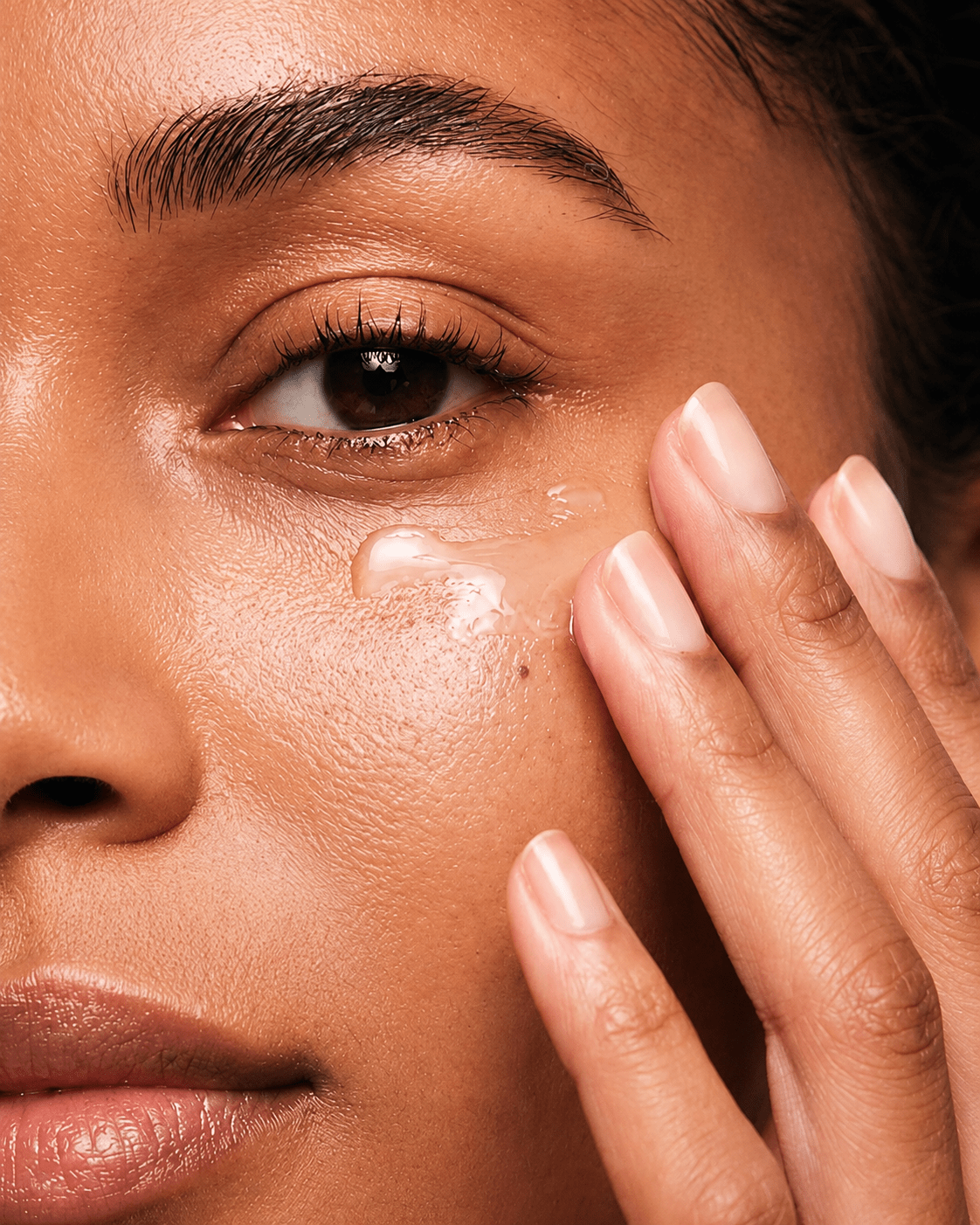
The short answer: A combination skin routine works best when the T-zone and cheeks are treated as two different skin types on one face. Use a mild, non-stripping cleanser for the whole face, a sebum-regulating active like 2% niacinamide only where oil shows up (forehead, nose, chin), and a humectant layer like hyaluronic acid everywhere, with a richer occlusive reserved for the cheeks. Most people see less shine and less flaking within 2 to 4 weeks of consistent use.
Key takeaways
- Combination skin is not two skin types on one face by chance, it reflects genuinely different sebaceous gland density and activity between the T-zone and cheeks (Cleveland Clinic, 2024).
- Niacinamide at 2% measurably reduced facial sebum production in a controlled study, with roughly a 21% drop in sebum excretion by two weeks (Draelos, 2006, Journal of Cosmetic and Laser Therapy).
- Salicylic acid is lipid-soluble, so it concentrates inside oil-filled pores rather than sitting on the whole face, a reason it's suited to spot or T-zone use rather than full-face treatment on drier skin (Arif, 2015, Clinical, Cosmetic and Investigational Dermatology).
- Low-molecular-weight hyaluronic acid outperformed high-molecular-weight HA on skin hydration measurements in a randomized trial, though symptom relief was similar across formulations (Setyaningrum et al., 2024, PubMed).
- Harsh surfactant cleansers physically extract lipids from the stratum corneum, which is part of why the same face wash can leave a T-zone feeling fine but cheeks feeling tight (Ananthapadmanabhan et al., 2013, International Journal of Cosmetic Science).
Building a combination skin routine gets confusing fast because most product marketing assumes one skin type per face. On r/skincareaddictsindia, a shelfie-and-review thread on combination oily T-zone skin drew over 260 upvotes and dozens of comments trading notes on what to use where, a sign this is a genuinely common sorting problem, even if it reads more as a "help me organize my routine" question than a single sharp pain point. Combination skin follows a fairly predictable underlying pattern, and once that pattern is clear, building a routine is mostly about zone-appropriate product choice, not more products.
What causes an oily T-zone and dry cheeks on the same face?
The forehead, nose, and chin carry a higher density of sebaceous glands than the cheeks and jawline, so they physiologically produce more oil regardless of what products are used (Cleveland Clinic, 2024). Cheeks, by contrast, have comparatively fewer active oil glands and thinner sebum output, which makes them more prone to feeling tight, flaky, or dehydrated, especially with air conditioning, harsh cleansers, or over-exfoliation.
This is a structural difference, not a sign that something is wrong with either zone. It also means a single product formulated for one zone will almost always underperform or overcorrect on the other.
What does a combination skin routine actually need?
A combination skin routine needs two things happening at once: oil regulation where sebaceous activity is high, and barrier support where it's low. That doesn't mean two entirely separate routines, most people can run one cleanser, one hydrating layer used everywhere, and one zone-specific step.
The mistake is picking a single moisturizer texture for the whole face and expecting it to solve both problems. A gel that controls shine on the forehead often isn't rich enough for the cheeks, and a cream rich enough for the cheeks usually feels heavy or triggers congestion on the nose and chin.
How should you cleanse combination skin without stripping the dry zones?
Cleansing is where combination skin routines most often go wrong, because a stripping, high-foam cleanser used twice daily removes lipids from the stratum corneum across the entire face, oily and dry zones alike (Ananthapadmanabhan et al., 2013). The T-zone can often recover its oil quickly since sebaceous activity there is naturally higher, but cheeks are left drier than before.
A mild, low-percentage salicylic acid gel wash, like the /PHD/ 2% Salicylic Acid Gel Face Wash, is formulated with niacinamide and allantoin alongside the acid to help clear pore congestion in the T-zone without the heavier stripping of a plain foaming wash, one cleanser for the whole face, rather than a second, harsher one reserved for oily areas.
Which actives belong on the T-zone versus the cheeks?
Sebum-regulating actives like niacinamide are meant for the oily zone, not the whole face. In a placebo-controlled study, a 2% niacinamide formulation reduced measured facial sebum production by about 21% at two weeks and roughly 22% by four weeks compared with placebo (Draelos, 2006). That's the rationale for using something like the /PHD/ 3% Niacinamide Oil-Free Moisturizer specifically on the forehead, nose, and chin, its gel texture and 3% niacinamide are built for oil control, and applying it over the cheeks as well can leave already-drier skin feeling tighter.
Salicylic acid works on the same logic: it's lipid-soluble, so it naturally concentrates in oil-filled follicles rather than distributing evenly across the face, which is why it's typically more useful as a T-zone or spot step than a full-face daily active on combination skin (Arif, 2015).
How do you layer a combination skin routine for oily and dry zones?
A practical order is: cleanse the whole face with a mild wash, apply a hydrating serum everywhere while skin is still damp, then apply zone-specific moisture on top. Hyaluronic acid suits the "everywhere" step because it's a humectant rather than an oil-control or oil-adding ingredient, it draws in water rather than changing sebum output.
A serum like the /PHD/ 2% Hyaluronic Acid Dewy Skin Serum, which blends low, mid, and high molecular weight hyaluronic acid, fits this step; a randomized trial found low-molecular-weight HA produced significantly better skin hydration measurements than high-molecular-weight HA alone, part of the reasoning behind blended-weight formulas (Setyaningrum et al., 2024). After that layer, follow with the niacinamide moisturizer on the T-zone only, and on the cheeks, a richer, more occlusive moisturizer if they still feel tight.
What makes combination skin worse?
Over-exfoliating the whole face to manage T-zone oil is the most common way people worsen their cheeks, a daily acid wash, a separate leave-on exfoliant, and a retinoid used together without spacing them out compounds barrier stripping on already-drier skin. Skipping moisturizer on oily areas because "it's already oily enough" is another common misstep; under-moisturized oily skin can still be dehydrated, and skipping hydration doesn't reduce sebum.
Switching products seasonally by texture rather than by zone, going all-gel in summer, all-cream in winter, also ignores that the T-zone and cheeks don't necessarily change at the same rate.
When should you see a dermatologist about combination skin?
Combination skin itself doesn't need medical treatment, but persistent inflammation, painful cystic breakouts confined to the jawline or chin, or cheeks that stay red, stinging, or flaking despite a gentler routine for several weeks are reasons to see a dermatologist rather than keep adjusting products. Those patterns can point to underlying issues, hormonal acne, seborrheic dermatitis, or a reaction to a specific ingredient, that a routine change alone won't fix.
Frequently asked questions
Is combination skin the same as oily skin with occasional dryness?
No, combination skin describes a face where the T-zone (forehead, nose, chin) is reliably oilier than the cheeks and jawline due to a genuine difference in sebaceous gland density between those zones (Cleveland Clinic, 2024). Oily skin with occasional dryness is usually oil production across the whole face that fluctuates with weather, hormones, or product changes, rather than a fixed zone pattern.
Can I use the same moisturizer on my T-zone and cheeks?
You can, but a single texture is a compromise for at least one zone. A gel moisturizer with niacinamide suits an oily T-zone but may not be enough for drier cheeks, while a rich cream suited to cheeks can feel heavy or contribute to congestion on the nose and chin. Many combination skin routines use one lightweight product everywhere and add a heavier layer only where needed.
How often should I use salicylic acid on combination skin?
A low-percentage salicylic acid cleanser, like a 2% gel face wash, can generally be used daily on the whole face since it's formulated to rinse off rather than sit on skin. Leave-on salicylic acid products are better limited to the T-zone or used every other day, since salicylic acid is lipid-soluble and can be more drying on cheeks with lower natural oil output (Arif, 2015).
What should I avoid combining in a combination skin routine?
Avoid stacking multiple leave-on actives, a leave-on exfoliant, a retinoid, and a strong vitamin C, on the same night without spacing them out, since this compounds barrier stripping fastest on the cheeks. It's also worth avoiding high-foam, sulfate-heavy cleansers twice daily, since surfactants extract lipids from the stratum corneum across the whole face, not just oily areas (Ananthapadmanabhan et al., 2013).
How long does it take to see results from a new combination skin routine?
Most people notice less midday shine on the T-zone and less tightness or flaking on the cheeks within 2 to 4 weeks of consistent use, in line with timeframes seen in sebum-reduction and hydration studies on niacinamide and hyaluronic acid (Draelos, 2006; Setyaningrum et al., 2024). Full barrier recovery on chronically dry cheeks can take longer, closer to 6 to 8 weeks, if the skin was previously over-exfoliated.
Are there ingredients that work for both oily and dry zones at once?
Hyaluronic acid is one of the few actives genuinely suited to the whole face in a combination skin routine, since it's a humectant that adds water rather than oil or matte finish, so it doesn't overload the T-zone or under-serve the cheeks. Niacinamide is also reasonably well tolerated across the face at lower concentrations, though its main functional benefit, sebum regulation, is most relevant to the oily zone specifically.