Reviewed by Dr. Shweta Lamba Narula,
The short answer: Oily skin results from androgen-driven sebocyte hyperactivity, worsened by over-cleansing (which triggers compensatory sebum overproduction), high ambient temperatures, and, paradoxically, dehydration. Learning how to control oily skin in India means targeting sebum at its source: topical niacinamide is the most clinically documented ingredient for reducing sebum excretion rate, with a double-blind RCT demonstrating significant reduction in sebum output at 2% concentration; 10% Niacinamide Spot Correcting Serum provides a substantially stronger effect. 2% Salicylic Acid Gel Face Wash provides follicular clearance via its lipophilic penetration. Skipping moisturizer in oily skin creates more oiliness, not less. This is physiologically established and one of the most important facts in oily skin management.
Why Does Skin Overproduce Sebum? The Science
Sebum is a complex lipid mixture, composed of triglycerides, wax esters, squalene, and free fatty acids, secreted by sebaceous glands attached to hair follicles. In normal skin, sebum output is approximately 1–2 mg per 10 cm² over 3 hours. In clinically oily skin, this output is chronically and significantly elevated.
The primary mechanisms driving excess sebum production:
Androgen receptor activity: Testosterone and dihydrotestosterone (DHT) bind to androgen receptors on sebocytes, the lipid-producing cells of the sebaceous gland, and directly upregulate the enzymes responsible for intracellular lipid synthesis. The density of androgen receptors on sebocytes, and the sensitivity of those receptors, are genetically determined and largely responsible for the hereditary nature of oily skin.
Temperature-driven secretion: Elevated ambient temperature directly increases sebaceous gland secretion rate through thermogenic mechanisms. India’s climate, with summer temperatures regularly exceeding 38–42°C in northern and central cities, combined with high solar radiation, creates near-maximal thermal stimulation. This explains why Indian oily skin is typically most challenging from March to September.
Disrupted barrier feedback loop: Healthy stratum corneum provides inhibitory feedback to sebaceous glands through ceramide-dependent signaling. When the barrier is intact and hydrated, glands moderate output. Aggressive cleansing, harsh toners, or physical scrubs strip this feedback layer, leaving sebaceous glands without their regulatory signal and causing compensatory overproduction.
Hormonal cyclical variation: Monthly androgen fluctuations (particularly the mid-cycle testosterone surge in women) cause predictable transient increases in sebum. PCOS creates a more chronic androgen-elevated state with consistently elevated sebum output.
What sebum overproduction does structurally: Excess sebum fills the follicular canal, mixing with desquamating corneocytes to form a keratin-sebum plug (the comedone). This creates both the visible surface features of oily skin (shine, visible pores distended by trapped sebum) and the follicular environment that supports Cutibacterium acnes colonization and inflammatory acne.
Why Does Over-Washing Make Oily Skin Worse?
This is among the most clinically important and most frequently ignored facts in oily skin management.
Washing the face more than twice daily, or using harsh, high-surfactant cleansers multiple times, initiates a predictable chain:
- Each wash strips intercellular lipids from the stratum corneum, raising skin pH above the protective 4.5–5.5 range
- Disruption of the acid mantle impairs the serine protease enzymes (kallikrein-5, kallikrein-7) that regulate normal barrier renewal and desquamation
- Elevated TEWL (water loss through the damaged barrier) sends a dehydration signal to sebaceous glands
- Glands upregulate sebum secretion to replace lost surface lipids. The compensatory sebum surge arrives within hours
- More washing → more stripping → more compensatory sebum → more shine → more washing
The clinical recommendation is precisely twice-daily cleansing with a pH-appropriate, gentle BHA cleanser. For midday shine management between cleanse cycles, the correct intervention is blotting papers, which absorb surface sebum mechanically without contacting the acid mantle, rather than additional washing, face wipes, or powder application that further disrupts the barrier.
What Ingredients Have Evidence-Based Efficacy for Sebum Control?
Niacinamide: The Most Clinically Supported Sebum Regulator
Of all commercially available topical actives, niacinamide (vitamin B3) has the strongest controlled clinical evidence for reducing sebum excretion rate. In the landmark double-blind, vehicle-controlled study by Draelos et al. (2006), topical 2% niacinamide produced statistically significant reductions in sebum excretion rate compared to vehicle control in participants with facial oiliness. The mechanism is direct: niacinamide downregulates the lipid synthesis activity of sebocytes, reducing the amount of sebum generated per gland rather than simply removing it post-production.
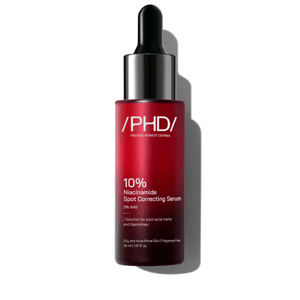
The 10% Niacinamide Spot Correcting Serum delivers a concentration five times the minimum studied for sebum control. Applied morning and evening, it provides consistent sebocyte-level regulation throughout the day and overnight. Additional benefits simultaneously delivered by niacinamide:
- Stimulates ceramide synthesis in keratinocytes, repairing the barrier damage that drives compensatory oiliness
- Inhibits melanosome transfer, addressing the post-acne PIH that frequently accompanies oily, acne-prone skin
- Reduces skin redness and inflammation through anti-inflammatory mechanisms at the keratinocyte level
Salicylic Acid: Follicular Clearance and Anti-Inflammatory Action
Salicylic acid (SA) is a beta-hydroxy acid (BHA) with the unique property of lipophilicity, meaning oil-solubility. This is functionally critical: AHAs (glycolic, lactic acid) are water-soluble and cannot penetrate the sebum-filled follicular canal. SA dissolves in the sebum matrix and reaches the follicular lining, where it:
- Exfoliates the follicular wall, loosening comedone plugs and preventing new comedone formation
- Reduces C. acnes microenvironment by clearing the sebum substrate the organism colonizes
- Exerts anti-inflammatory activity via inhibition of arachidonic acid metabolism and prostaglandin synthesis
The 2% Salicylic Acid Gel Face Wash delivers the 2% FDA-recognized effective concentration in a rinse-off gel vehicle. For maximum benefit, apply and leave on skin for 30–60 seconds before rinsing. Brief contact time significantly increases follicular penetration compared to immediate rinsing.
The Salicylic Acid Acne Spot Treatment Gel provides targeted, high-contact-time delivery directly to active lesions or chronically congested zones (nose, forehead) where follicular plugging is most dense.
What to Avoid: Practices That Worsen Oiliness Despite Feeling Effective
- Clay masks (daily use): Effective as a 1–2×/week supplemental step for targeted T-zone management. Used daily, they over-dry, impair the barrier, and trigger compensatory sebum. Reserve for twice-weekly use at most.
- Alcohol-based toners and astringents: Produce a temporary matte finish through dehydration of the stratum corneum. Within 4–6 hours, compensatory sebum restores surface oil levels to baseline or above. The acid mantle disruption from repeated alcohol exposure also increases skin sensitivity and long-term reactivity.
- Pore strips: Mechanically remove the oxidized tip of a blackhead (the visible dark surface) but leave the follicular lining intact. The pore refills within 3–5 days. Repeated stripping damages the follicular opening, potentially increasing the long-term susceptibility to comedone formation.
- Mattifying primers with silicone-only formulas: Effective cosmetic concealment of shine without any physiological effect on sebum. Not a substitute for managing the underlying sebum production rate.
Why Does Oily Skin Still Need a Moisturiser?
The most persistently harmful misconception in oily skin care: that moisturizer should be skipped to “not add more oil to already oily skin.”
The error in this reasoning: sebum (a lipid secreted by sebaceous glands) and stratum corneum hydration (the water content of the outer epidermis) are physiologically independent variables. Oily skin is frequently over-sebaceous and under-hydrated simultaneously. The excess sebum is not hydrating the epidermis. It is coating the skin surface while the stratum corneum itself may be significantly dehydrated from cleansing-related barrier disruption.
The clinical consequence of skipping moisturizer in oily skin:
- TEWL remains elevated due to incomplete barrier recovery post-cleanse
- Dehydrated stratum corneum loses its osmotic feedback capacity
- Sebaceous glands receive no inhibitory signal from a well-hydrated barrier
- Sebum output increases in compensation
- More oiliness, the opposite of the desired result
The clinical correction: provide aqueous hydration through a non-comedogenic, oil-free moisturizer to restore the stratum corneum water content, re-establish barrier feedback, and normalize the sebocyte regulatory environment. The 3% Niacinamide Oil-Free Moisturizer is formulated precisely for this: lightweight, non-comedogenic, oil-free, and containing additional niacinamide to extend the sebum-regulating effect of the serum through the day.
Most patients who begin using an oil-free moisturizer consistently after previously skipping it report visible reduction in surface shine within 4–6 weeks, as sebaceous feedback normalizes.
How Should Oily Skin Choose a Sunscreen?
Sunscreen non-compliance is disproportionately high in oily skin due to formulation incompatibility with heavy cream or emollient sunscreens. The consequences are significant: unprotected UV exposure worsens post-acne PIH in Fitzpatrick III–VI skin types, drives MMP-mediated collagen degradation, and triggers melanogenesis. All of these consequences compound the visible appearance of oily, acne-prone skin over time.
The solution is formulation-appropriate selection. Gel-based and fluid sunscreens distribute UV filters in water-soluble or silicone-based film-forming vehicles rather than in oils or waxes. They do not add surface lipids, do not occlude sebaceous glands, and do not produce the greasy finish that cream sunscreens create on oily skin.
The Niacinamide Dry Touch Matte Sunscreen is specifically formulated for oily skin: it provides a dry-touch, mattifying finish that controls shine through the day while incorporating niacinamide for additional sebum-regulating benefit. This makes the sunscreen step not just photoprotective but actively therapeutic for oily skin.
Critical SPF parameters for oily skin in India:
- SPF value: SPF 50+ minimum; higher SPF provides a practical buffer against the underuse effect (most people apply half the needed quantity)
- PA rating: PA++++ (PPD ≥16) for maximum UVA protection. UVA drives melanogenesis and PIH worsening
- Texture: Gel or fluid-based; avoid creams and emollient lotions
- Non-comedogenic: Confirmed in formulation; silicone-based film formers are acceptable; avoid mineral oil, lanolin, isopropyl myristate
What Is the Daily Routine for Controlling Oily Skin?
Morning:
- 2% Salicylic Acid Gel Face Wash: 30–60 second contact, cool water rinse
- 10% Niacinamide Spot Correcting Serum: thin layer, allow 3 minutes to absorb
- 3% Niacinamide Oil-Free Moisturizer: lightweight layer over serum
- Niacinamide Dry Touch Matte Sunscreen: ¼ teaspoon (approximately 2 mg/cm²) as final step
Midday (as needed):
Blotting papers only, not additional cleansing
Evening:
- 2% Salicylic Acid Gel Face Wash: single thorough cleanse
- 10% Niacinamide Spot Correcting Serum
- 3% Niacinamide Oil-Free Moisturizer
- Salicylic Acid Acne Spot Treatment Gel: applied with clean fingertip to active lesions only, after moisturizer
Frequently Asked Questions
How long does niacinamide take to reduce oiliness?
Clinical evidence shows measurable reductions in sebum excretion rate within 2–4 weeks of consistent twice-daily use. Visible surface shine reduction is typically reported by users at 3–4 weeks, with more stable and sustained sebum control established at 6–8 weeks of continuous use. Efficacy is maintained only with ongoing application. Stopping niacinamide reverses its sebum-regulatory effect within several weeks.
Why do I still have oily skin even though I wash my face multiple times a day?
This is a direct consequence of over-cleansing. Each additional wash removes the acid mantle and barrier lipids, triggering a compensatory sebum surge from sebaceous glands within 4–6 hours. The more aggressively and frequently skin is stripped, the more sebum it produces to compensate. Reducing to exactly twice daily with the 2% Salicylic Acid Gel Face Wash and introducing the 10% Niacinamide Spot Correcting Serum is the clinical approach to breaking this cycle. Improvement may take 2–3 weeks to become apparent as sebaceous feedback recalibrates.
Will using a moisturizer make my oily skin worse?
No. As described above, skipping moisturizer dehydrates the stratum corneum, which triggers sebaceous gland compensation. An oil-free, non-comedogenic moisturizer provides the hydration signal that moderates sebum production. Patients who introduce the 3% Niacinamide Oil-Free Moisturizer after previously skipping moisturizer typically report a reduction in surface shine after 4–6 weeks, not an increase.
Is the Niacinamide Dry Touch Matte Sunscreen better for very oily skin than gel sunscreen?
For very oily skin or during high-humidity Indian summers (monsoon season in Mumbai, high heat in Delhi June–August), the Niacinamide Dry Touch Matte Sunscreen provides the optimal combination: a mattifying dry-touch finish specifically engineered for oily skin, plus additional niacinamide in the formula for ongoing sebum regulation through the day. It also contains SPF protection appropriate for India’s UV environment.
Is diet related to oiliness?
Emerging evidence links high-glycemic-index diets and dairy consumption to increased sebum production. High-GI foods elevate serum insulin and IGF-1 (insulin-like growth factor-1), which in turn stimulate androgen synthesis in sebocytes, driving increased lipid production. However, the effect size in published studies is modest compared to topical interventions directly targeting the sebum pathway. Dietary modification is a reasonable secondary adjunct, not a substitute for niacinamide and salicylic acid.
Does stress increase oiliness?
Yes. Cortisol (the primary stress hormone) activates sebaceous gland androgen receptors, directly stimulating sebum output. This is the physiological basis for the clinical observation that oily skin worsens during examination periods, high-pressure work deadlines, and other stress states. Managing the topical routine consistently during high-stress periods is more important, not less. The underlying physiology is adding a sebum stimulus that the routine needs to counteract.
Can I use a toner to reduce oiliness?
Only if the toner provides a functional active, such as niacinamide, AHA at low concentration (2–3%), or BHA, without stripping alcohol (denatured alcohol, isopropyl alcohol). Astringent toners marketed for oily skin create a temporary matte effect through dehydration and acid mantle disruption, triggering rebound oiliness within hours. The routine above delivers the required active ingredient coverage through targeted serums; a toning step is not necessary.
Should I skip sunscreen on indoor days?
No. UVA (320–400 nm) penetrates glass and remains at approximately 80% of clear-sky levels indoors near windows, even on overcast days. For oily, acne-prone skin specifically, UV protection is not only an anti-aging measure. It is an active component of hyperpigmentation prevention. Each UV exposure without protection darkens post-acne marks and stimulates new melanocyte activity. Niacinamide Dry Touch Matte Sunscreen should be applied every morning regardless of planned indoor or outdoor activity.