Reviewed by Dr. Shweta Lamba Narula,
Alpha arbutin is a glycosylated derivative of hydroquinone that competitively inhibits tyrosinase, the enzyme that initiates melanin synthesis, without the irritation or rebound pigmentation risk associated with hydroquinone. At 2%, it reduces melanin production at the source. Visible fading of post-inflammatory hyperpigmentation (PIH) and post-acne marks takes 4 to 8 weeks of consistent use. For best results, pair with SPF every morning. UV directly stimulates tyrosinase and will counter the depigmenting work of your serum. Consider combining with niacinamide, which inhibits melanin transfer through a complementary mechanism.
Post-acne marks. Old pimples that healed but left a flat, discoloured patch behind. Sun-induced tanning that doesn't lift with moisturiser. Melasma patches that appear regardless of season. These are the dark spot presentations Indian skin sees most often, and they all share the same upstream cause: excess melanin deposited in the upper layers of the skin.
The right serum addresses that mechanism directly, rather than brightening the surface without touching the source. This guide explains why Indian skin produces excess melanin so readily, what alpha arbutin does about it at a biochemical level, how to choose between the available options, and which combination of actives your routine actually needs.
Why is Indian skin more prone to dark spots?
Indian skin sits primarily in Fitzpatrick phototypes III to V, a range characterised by higher baseline melanin content. More melanin means stronger intrinsic UV defence, but it also means a more reactive melanin-producing system.
When Indian skin is injured, by acne, friction, waxing, a small cut, or even aggressive exfoliation, the inflammatory response that follows triggers melanocytes (melanin-producing cells) into overdrive. The result is post-inflammatory hyperpigmentation (PIH): the brownish mark left behind once the original injury has resolved. PIH is not the injury itself; it is the skin's melanin response to that injury, and it persists long after the wound has healed.
India's UV environment compounds this. Year-round intense UV, particularly UVA, which drives melanin production at consistent intensity regardless of season and penetrates through cloud cover and glass, means untreated PIH is continuously re-stimulated from above. Without SPF, dark marks do not fade passively; they remain static or worsen.
Hormonal factors add a third layer. Melasma, triggered and sustained by oestrogen, progesterone, and thyroid hormones, is disproportionately prevalent among Indian women and presents as bilateral, symmetric patches on the cheeks, forehead, and upper lip. PIH and melasma require different depths of treatment, but both respond to tyrosinase-inhibiting actives combined with strict sun protection.
What does alpha arbutin actually do for dark spots?
All melanin production begins with tyrosinase. This enzyme converts the amino acid tyrosine into DOPA, and DOPA into DOPA-quinone, the first committed steps in the melanin synthesis pathway. Without tyrosinase activity, this cascade does not proceed.
Alpha arbutin is a glycosylated form of hydroquinone that acts as a competitive inhibitor of tyrosinase. It binds to the enzyme's active site, the same site that would otherwise bind tyrosine, and prevents the reaction from proceeding. The result is less melanin synthesised per melanocyte per day. Over time, as melanin-laden skin cells turn over and are replaced by cells that produced less melanin during their lifespan, dark spots fade gradually and consistently.
A study in Archives of Pharmacal Research confirmed that alpha arbutin's inhibitory activity against tyrosinase is significantly stronger than that of unmodified hydroquinone at equivalent concentrations, and that the glycosylation confers greater stability and reduced cytotoxicity. This is why alpha arbutin has displaced hydroquinone as the preferred first-line depigmenting agent in modern formulations.
At 2%, the standard dermatologist-recommended concentration, alpha arbutin consistently addresses PIH and post-acne marks. It does not bleach skin to a lighter baseline shade; it specifically acts on areas of excess melanin accumulation.
How do you choose the right serum for dark spots on Indian skin?
Three practical decisions:
1. Identify the type of dark spot. Post-inflammatory hyperpigmentation (PIH), flat brownish to greyish marks left by acne or injury, responds well to alpha arbutin and niacinamide used consistently. Melasma, bilateral, hormonally driven patches, requires strict SPF above all else, and topical actives as a long-term companion; a dermatologist should be consulted for moderate to severe cases. Sun-induced generalised darkening responds to tyrosinase inhibitors plus consistent SPF, but takes longer than PIH.
2. Match the active to the mechanism. Alpha arbutin inhibits tyrosinase, melanin synthesis. Niacinamide inhibits the transfer of melanosomes from melanocytes to surrounding keratinocytes, a different step downstream. Kojic acid chelates the copper ions in tyrosinase, disabling it by a different route. Vitamin C reduces DOPA-quinone intermediates and scavenges free radicals that drive UV-induced melanin production. Using actives from two or more points in the pathway is more effective than using one alone.
3. Commit to SPF. No dark spot serum works effectively without daily SPF 50+ PA++++. UV is the constant upstream driver of tyrosinase activation. A dark spot serum that operates without sunscreen is suppressing a process that UV is simultaneously re-triggering every morning.
The Best Serums for Dark Spots in India: 6 Picks
- /PHD/ 2% Alpha Arbutin Depigmentation Serum - Best overall for PIH and post-acne dark marks. 2% Alpha Arbutin, Vitamin C, Kojic Acid, Licorice Root. Multi-mechanism tyrosinase inhibition in a single serum.
- /PHD/ 10% Niacinamide Spot Correcting Serum - Best companion for active pigmentation. 10% Niacinamide, Arbutin, NAG. Inhibits melanin transfer rather than synthesis, a complementary mechanism to arbutin, making the pairing additive.
- Pilgrim 2% Alpha Arbutin Brightening Serum - Best mid-range arbutin serum. 2% Alpha Arbutin with brightening actives. Same clinical concentration as pick 1; a reliable second option for the same concern.
- The Ordinary Alpha Arbutin 2% + HA - Best budget international option. Minimal formula: 2% alpha arbutin with hyaluronic acid. No co-actives; an effective starting point for first-time arbutin users.
- La Roche-Posay Mela B3 Serum - Best clinical-grade dark spot corrector. 10% Niacinamide, LHA. Formulated specifically for Fitzpatrick III-VI skin and melasma; pharmacist-standard in France.
- Paula's Choice 10% Niacinamide Booster - Best premium multi-action option. 10% Niacinamide, Ascorbyl Glucoside, Licorice Root. Addresses pigmentation, inflammation, and antioxidant defence simultaneously.
How do you build a daily routine around a dark spot serum?
The most efficient protocol uses alpha arbutin in the evening and niacinamide in the morning, each targeting a different step in the melanin pathway across a 24-hour cycle.
Morning routine for PIH and post-acne marks
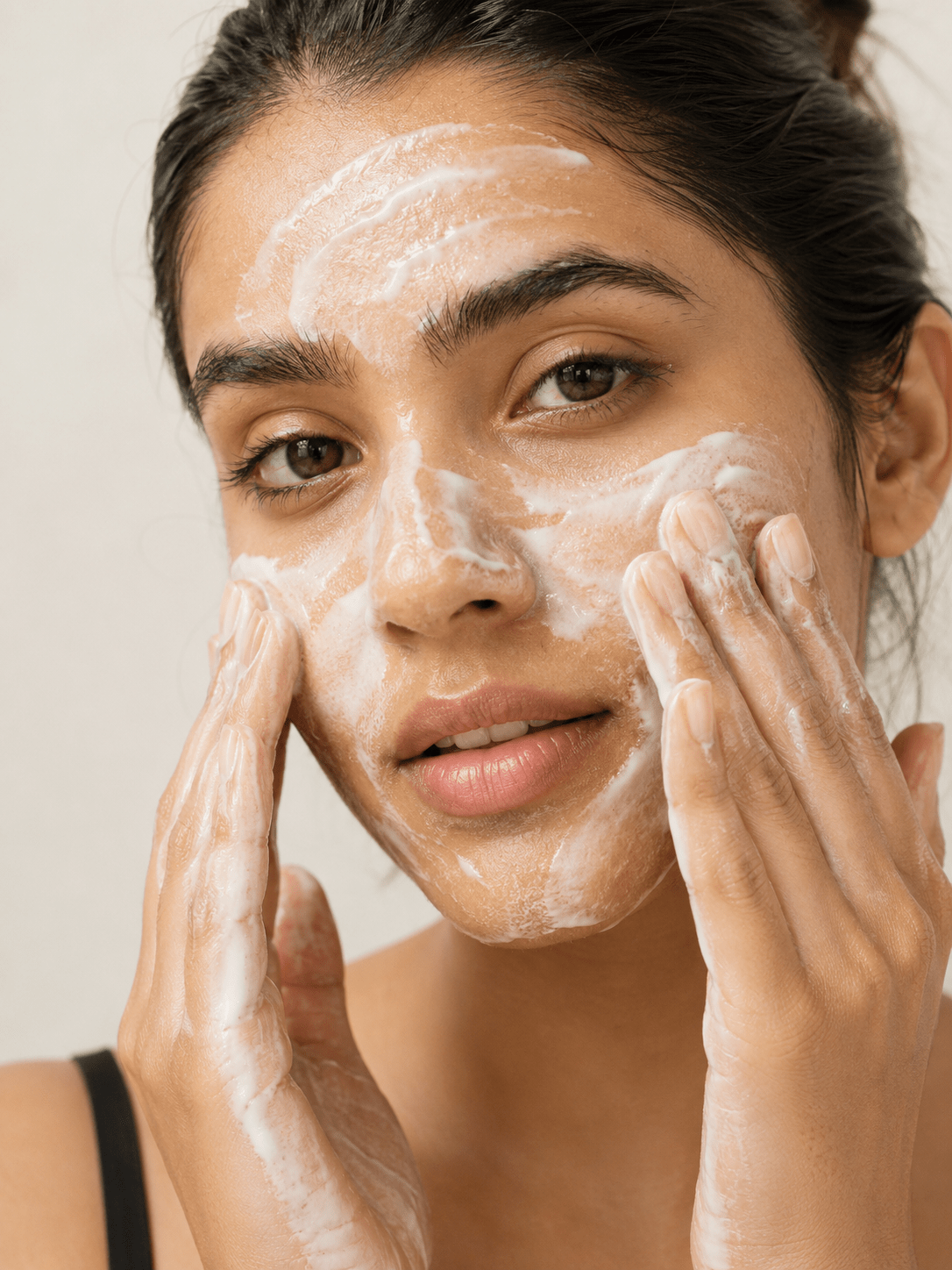
Step 1 - Cleanser. /PHD/ Ceramide Hydrating Cleanser or any gentle low-pH cleanser. Pat dry.
Step 2 - Niacinamide serum. /PHD/ 10% Niacinamide Spot Correcting Serum. 2 to 3 drops on clean skin, patted in gently. Niacinamide is photostable and compatible with all morning actives.
Step 3 - Moisturiser. A lightweight, non-comedogenic formula. Let it absorb.
Step 4 - Sunscreen. /PHD/ Panthenol Hydrating Gel Sunscreen SPF 60 PA++++. SPF is not a finishing step; it is an active participant in the depigmentation process. UV stimulates tyrosinase; sunscreen removes that stimulus. Without it, the morning serum is working against a constant UV headwind.
Evening routine
Step 1 - Cleanser. Same gentle cleanser to remove SPF and pollution from the day. Pat dry.
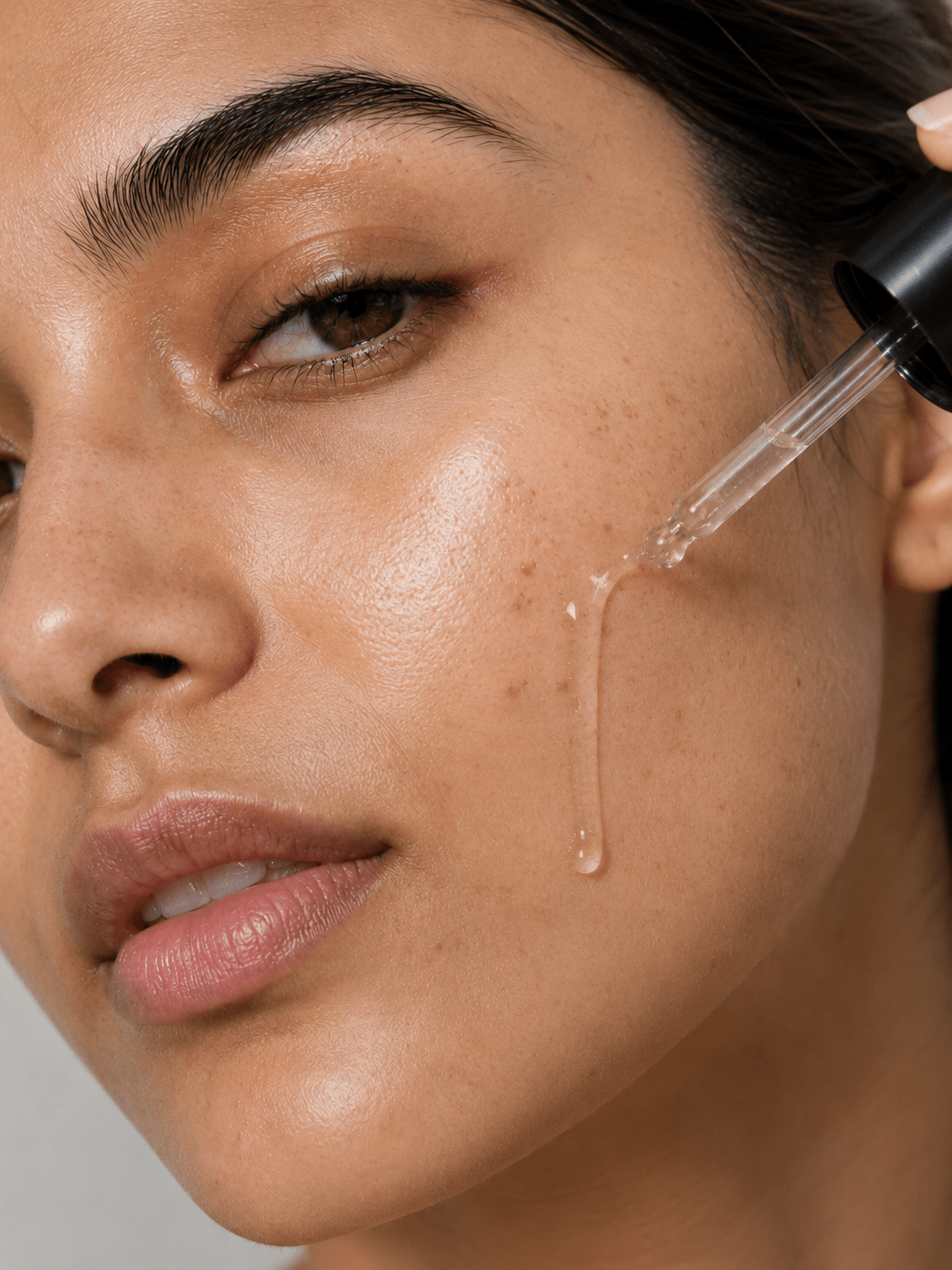
Step 2 - Alpha arbutin serum. /PHD/ 2% Alpha Arbutin Depigmentation Serum. 2 to 3 drops patted onto dark spot areas. Evening application means the active works overnight during the skin's natural repair cycle, with no UV exposure competing against it.
Step 3 - Moisturiser. A slightly richer formula than morning to support overnight barrier recovery.
This morning-and-evening split, niacinamide targeting melanin transfer during the day, alpha arbutin targeting melanin synthesis overnight, addresses PIH from two mechanistic directions without requiring both actives to be layered in the same session.
What mistakes do people most commonly make with dark spot serums?
Expecting results in under 4 weeks. Dark spots are months of melanin accumulation. Even the most effective serums work at the rate of skin cell turnover, roughly one cycle every 28 days. Visible improvement in post-acne PIH typically begins at 4 to 6 weeks; older marks take 8 to 12 weeks. Stopping at week 3 because results are not visible is the most common reason a working product is abandoned.
Skipping SPF. UV activates tyrosinase daily. A dark spot serum applied beneath sunscreen produces results. The same serum applied without SPF is fighting constant re-stimulation. SPF is not optional for anyone treating hyperpigmentation; it is the other half of the treatment.
Using a single-mechanism product and expecting comprehensive results. Alpha arbutin alone inhibits synthesis. Niacinamide alone inhibits transfer. Each addresses one step in a multi-step pathway. Using both in the same routine targets the problem from two angles simultaneously and is more effective than either alone.
Introducing aggressive exfoliants alongside depigmenting actives. Daily AHAs or physical scrubbing creates micro-inflammation, which re-triggers the melanocyte response that caused PIH in the first place. Gentle exfoliation once or twice weekly is sufficient; more is actively counterproductive.
Frequently Asked Questions
What is the best serum for dark spots in India?
For post-acne dark marks and PIH, a 2% alpha arbutin serum is the evidence-based first choice; it directly inhibits tyrosinase, the enzyme responsible for melanin synthesis. The /PHD/ 2% Alpha Arbutin Depigmentation Serum pairs 2% alpha arbutin with Vitamin C, Kojic Acid, and Licorice Root, addressing tyrosinase through four co-ordinated mechanisms in a single step. Visible results take 4 to 8 weeks of daily use with sunscreen.
How long does alpha arbutin take to work on dark spots?
4 to 8 weeks of consistent daily use for visible fading of post-acne PIH. Older marks, more than 6 months old, or driven by hormonal triggers, can take 8 to 12 weeks. Alpha arbutin works at the rate of natural skin cell turnover; there is no shortcut to this timeline. What matters most is not speeding up the product but not discontinuing it before the 6-week mark.
Is alpha arbutin safe for daily use on Indian skin?
Yes. 2% alpha arbutin is the standard dermatologist-recommended concentration for Indian skin (Fitzpatrick III-V) and is formulated for daily use. Unlike hydroquinone, which can cause paradoxical darkening (ochronosis) with prolonged use, alpha arbutin is a stable glycoside that has not shown rebound hyperpigmentation or bleaching risk at 2% in published studies. It is tolerated by most skin types, including sensitive skin.
Can I use alpha arbutin and niacinamide together?
Yes, and this is one of the most effective pairings for PIH on Indian skin. Alpha arbutin inhibits tyrosinase (stopping melanin from being synthesised); niacinamide inhibits melanosome transfer to surrounding skin cells (stopping melanin from being distributed). These two mechanisms operate at different points in the same pathway. A practical split is the /PHD/ 10% Niacinamide Spot Correcting Serum in the morning and the /PHD/ 2% Alpha Arbutin Depigmentation Serum in the evening.
Should I use a dark spot serum in the morning or at night?
Alpha arbutin is most commonly recommended for evening use. It is photostable, so morning use is not harmful, but applying it at night means it works during the skin's natural overnight repair cycle without UV exposure running counter to its action. Niacinamide, by contrast, is suitable and well-used in the morning. The split, niacinamide in the morning, alpha arbutin in the evening, is the most efficient routine structure for PIH.
What is the difference between alpha arbutin and vitamin C for dark spots?
Both inhibit melanin formation but through different mechanisms. Alpha arbutin competitively occupies tyrosinase's active site, preventing melanin synthesis from initiating. Vitamin C reduces DOPA-quinone intermediates in the melanin pathway and scavenges the free radicals that UV generates to drive melanin production. Alpha arbutin is more targeted and predictably stable across formulations; vitamin C is more chemically reactive but degrades faster. The /PHD/ 2% Alpha Arbutin Depigmentation Serum includes both actives, using each where it works best.
Can dark spot serums treat melasma?
Topical actives including alpha arbutin and niacinamide can reduce melasma appearance over time, but melasma has a hormonal and UV driver that topicals alone do not fully resolve. The AAD's standard recommendation includes topical depigmenting agents alongside strict broad-spectrum sun protection. For moderate to severe melasma, or cases that do not respond after 12 weeks of consistent topical use, a dermatologist consultation is advised; prescription-strength actives and procedural options may be appropriate.
Do dark spot serums work without sunscreen?
No, not effectively. UV radiation activates tyrosinase and stimulates melanin production continuously. A dark spot serum suppresses melanin synthesis; sunscreen eliminates the UV signal that triggers that synthesis in the first place. Using a depigmenting serum without daily SPF 50+ PA++++ is working against a constant external stimulus. The combination of a tyrosinase-inhibiting serum in the evening and SPF 50+ PA++++ every morning is what the evidence supports for PIH reduction.